
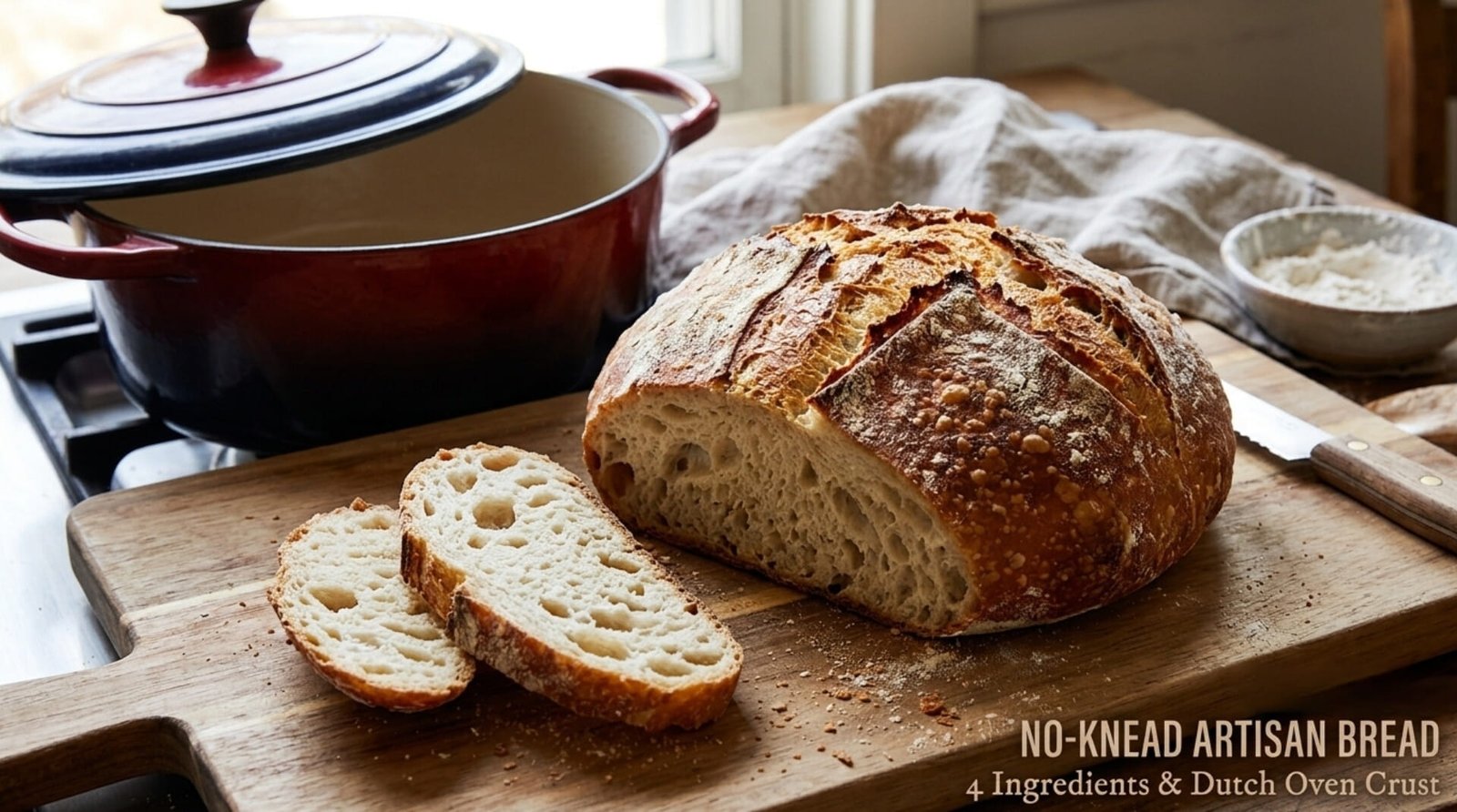
If you have ever thought that baking homemade bread is intimidating, time-consuming, or requires years of sourdough experience, prepare to be amazed. This foolproof bread recipe proves that anyone can bake a golden, crackly-crusted, bakery-worthy loaf in their home kitchen using just flour, water, yeast, and salt. There is absolutely no stand mixer, no tedious hand-kneading, and no specialty baking equipment required.
The Science Behind the No-Knead Revolution
Traditional bread making requires 15 to 20 minutes of vigorous kneading to align the proteins (gliadin and glutenin) into a strong, elastic gluten network. This no-knead technique relies on two powerful natural allies: a high-hydration dough (roughly 78% water) and a slow, overnight fermentation (12 to 18 hours).
As the micro-amount of yeast slowly feeds on the starches in the flour over time, carbon dioxide bubbles naturally churn the wet dough from the inside out. In culinary terms, time and water do all the kneading for you, producing gigantic airy pockets (an open crumb) and a deep, complex, gently fermented flavor comparable to artisanal sourdough.
Why Baking in a Dutch Oven is Non-Negotiable
Commercial bakeries use expensive deck ovens equipped with built-in steam injectors. Steam is essential during the first 20 minutes of baking because it keeps the dough's outer surface moist and pliable, allowing the loaf to expand to its maximum height (oven spring) before the crust sets. Steam also gelatinizes the starches on the exterior, yielding that iconic, blistered, shatteringly crisp golden crust.
A heavy cast iron Dutch oven with a tight-fitting lid acts as a miniature steam chamber right inside your oven. The moisture evaporating from the wet dough is trapped inside, creating bakery-level steam without buying any expensive gadgets.
4 Simple Pantry Ingredients
- All-Purpose Flour or Bread Flour: 3 cups (390g), spooned and leveled. (Bread flour yields a slightly chewier crumb with larger holes, but unbleached all-purpose flour produces phenomenal results as well).
- Active Dry Yeast or Instant Yeast: 1/2 teaspoon (2g). Just a pinch is needed for slow overnight fermentation.
- Fine Sea Salt: 1 1/2 teaspoons (9g) for essential flavor and to regulate yeast activity.
- Warm Water: 1 1/2 cups (360ml) around 100°F–110°F (lukewarm to the touch).
Step-by-Step Baking Method
1. Mix the Shaggy Dough: In a large glass or ceramic mixing bowl, whisk together the flour, yeast, and salt. Pour in the warm water. Using a sturdy wooden spoon or Danish dough whisk, stir for about 60 seconds until all flour is absorbed and a sticky, wet, shaggy dough forms. Do not knead!
2. Slow Overnight Rise: Cover the bowl tightly with plastic wrap or a silicone lid. Let the dough rest on your kitchen counter at room temperature (around 68°F–72°F) for 12 to 18 hours. When ready, the dough will be more than doubled in size, bubbly, and fragrant.
3. Shape the Loaf: Generously dust a sheet of parchment paper with flour. Gently scrape the sticky dough onto the parchment using a rubber spatula. With floured hands, gently fold the edges of the dough toward the center to form a round ball (boule). Cover loosely with a clean kitchen towel and let rest for 30 minutes.
4. Preheat the Dutch Oven: While the dough rests, place your empty Dutch oven (with the lid on) inside your oven and preheat to 450°F (230°C) for at least 30 minutes so the pot gets blisteringly hot.
5. Bake with Steam: Carefully remove the scorching-hot Dutch oven from the oven. Remove the lid. Lift the dough by holding the edges of the parchment paper and lower it directly into the hot pot. Cover with the lid and bake for 30 minutes.
6. Uncover for the Golden Crust: Remove the lid and bake uncovered for another 12 to 15 minutes, until the crust is deep golden brown, crackly, and reaches an internal temperature of 205°F–210°F. Carefully lift the bread out and cool on a wire rack for at least 45 minutes before slicing.
Chef's Pro-Tips for Perfect Slices
Resist the temptation to cut into your freshly baked loaf while it is still piping hot! The interior is still setting from internal steam; cutting it too early will compress the crumb and make it gummy. Let it cool until room temperature to lock in that airy, chewable texture.



Comments & Reader Questions (0)
Tried this recipe or have a question? Post a comment below using your Google account. Whenever someone replies to your comment, you will receive an instant notification in your inbox!